What is the Problem and What can be Done?
The problem is that insecticides previously used by lawncare companies including LawnWorks have been withdrawn from use. Their use is now forbidden.
Below we take a look at the main species of grubs causing problems in lawns.
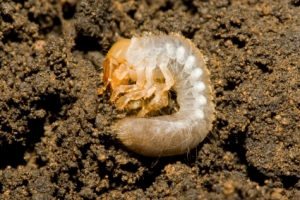 Chafer Grubs
Eggs laid during late spring and early summer by chafer beetles will hatch soon afterwards. The grubs then begin eating the roots of the lawn. These pests have a life cycle of up to three years (but most develop within a year) before finally hatching as flying beetles.
 Leatherjackets
In the case of leatherjackets, daddy-long-legs lay eggs during late summer which hatch quickly. The grubs begin feeding on the grass plant at and just below the soil surface. The grubs go deeper during cold weather and resurface during spring as the soil warms up.
Frit fly
Frit fly have three generations each year but most damage is done during autumn. The grubs tunnel into and feed on the grass stems near the soil surface.
Where large numbers of grubs are present the lawn will appear as though drought stressed. Birds and animals will tear at an already weakened lawn to get at the grubs. The damage can be devastating because the roots, ie the anchors of the turf, have been degraded so the turf comes away easily. Damage usually begins in autumn, slowing during cold weather, but then restarting in spring as the grubs move back to the surface.
Options
Options are limited.
1) Nematodes
Nematodes are live microscopic worms that are introduced into an infested area of lawn by watering, where they will prey on the grubs. They are available during autumn to treat chafer grubs and leatherjackets. Different nematodes are required for each species but there are no nematodes for treating frit fly larvae.
As a live organism nematodes have to be transported and stored, then mixed and applied in very specific conditions. Heavy irrigation is usually required as they will die in dry soil and the window of opportunity for effective use is extremely narrow. For this reason we do not offer them as a regular part of our service as we do not believe that we will achieve acceptable results in doing so.
You can buy nematodes online for DIY use.
TIP If you are suffering grub damage during winter and spring and want to use nematodes during the following autumn, take some pictures of your lawn to remind yourself of where the damage has occurred. Then you can treat these areas specifically which will save time and ensure better results.
2) Pre-Infestation Lawn Conditioning / Strengthening
LawnWorks’ approach is now to try to make the lawn as grub-unfriendly as possible whilst strengthening the turf so that an infestation has less damaging consequences.
To this end we will use products to treat the lawn that help minimise thatch, such as low-salt fertilisers and nutrients to keep microbial populations buoyant. In addition regular aeration and scarification will reduce thatch whilst overseeding will replace damaged grass and keep turf strong.